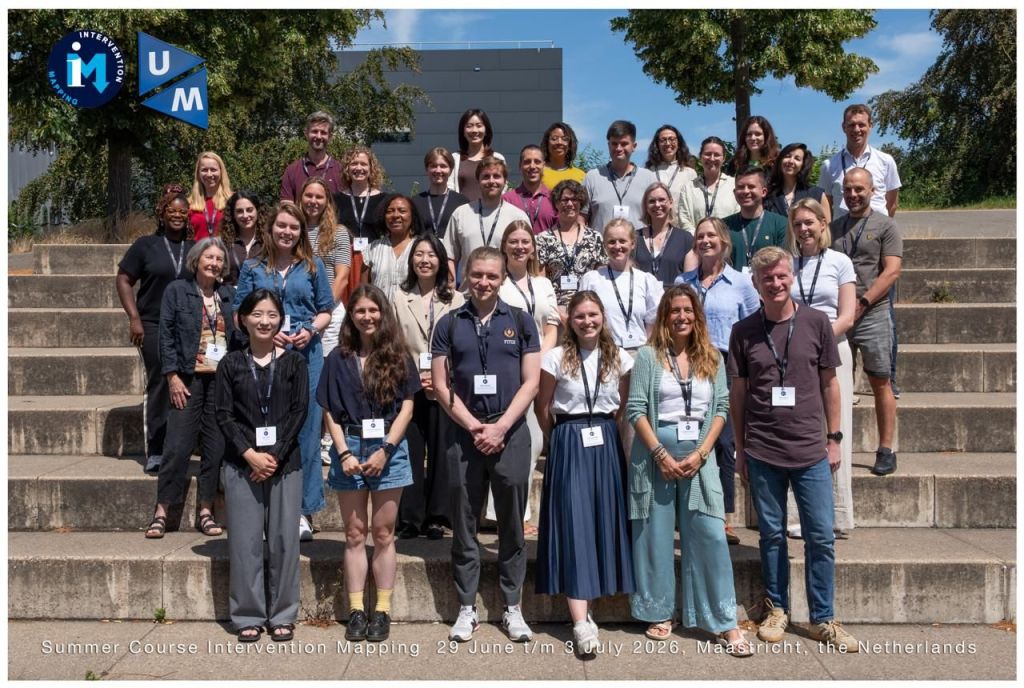
From 29 June to 3 July, I attended the summer course “Intervention Mapping: Designing Theory-based and Evidence-based Programs” at Maastricht University, jointly organised by the Applied Social Psychology section and the Department of Health Promotion. Intervention Mapping (IM) is a well-known framework for designing health promotion and behaviour change programmes. It takes planners through six steps, from a needs assessment of the problem at hand to a plan for evaluating the finished intervention, with the aim of making sure every design decision is grounded in theory and evidence.
I specialise in developing and evaluating behaviour change interventions, and over the years I’ve built up hands-on experience with the Behaviour Change Wheel, as well as the Multiphase Optimisation Strategy and the UK MRC guidance for developing and evaluating complex interventions. IM, though, was a framework I knew mostly by reputation. Given how popular it is, this felt like a good moment to finally get properly acquainted with it and add it to my toolbox.
The one-week course follows IM’s six steps in order – needs assessment; performance and change objectives; theory- and evidence-based methods and practical applications; programme production; planning for adoption and implementation; and planning for evaluation – with each step introduced in a plenary session and then applied in small groups to a case of our choosing. My group chose sport gambling among young males, which made for an interesting use case: complex enough to work through every step properly, and far enough from my usual focus on health behaviours to make me apply the logic of the framework rather than fall back on habit. I also learnt a lot about sport gambling in general! The course included “IM applied in the real world” sessions, showing how the steps play out in practice. Robert Ruiter, Francine Schneider and Rik Crutzen led the course brilliantly and I was struck by how generous they were with their time – happy to dig into our group’s case in detail as well as to provide individual consultation on our own ongoing work and discuss potential collaborations.
Looking back on the week, my main impression is just how thorough IM is. It shares some common ground with the Behaviour Change Wheel (for example, both insist that you properly understand a behaviour and its determinants before designing anything) but IM is the most systematic and comprehensive intervention development approach I have come across. I think that thoroughness is valuable: very little is left to chance, and every step forces you to justify your choices with theory or evidence. At the same time, I can see how that same thoroughness could put off teams working under tight deadlines or without much methodological background, since it is a time investment to work through properly. For my own work, I’m looking forward to trying IM out on upcoming projects!
P.S.: I also must mention the location itself. Maastricht is beautiful and we had a nice, not-too-hot summer weather all week, which was a very welcome change from Singapore’s heat. The guided city walk included in the programme was a great way to see the old town. Rather than staying in Maastricht, I based myself in Valkenburg, a small nearby town that turned out to be a really pleasant place to come back to each evening – quiet, pretty and with a lot of greenery around.


Leave a Reply